Except when our goal is to build an armored urn, the erection of a wall inevitably entails the need to pierce it. We need light and air to pass through, to look from one side to the other, or simply to enter and exit a building.
Drilling that hole, however, is a tricky business: the first problem is that the material above the opening tends to crumble, and everything is ruined.
The first instinct to prevent that from happening is to make the hole arched — either rounded or pointed. In this way, the weight of the masonry above can find its way to the edges and, while obeying tyrannical gravity, bridge the abyss of the opening.
But sometimes, a geometric and formal obsession struggles to prevail against logic and simplicity. In this case, it is the desire for rectitude and orthogonality that imposes itself — and with it comes an uncomfortable, yet fascinating, problem. As are, after all, all those born from curiosity and desire.
This yearning for the top of a door or window to be straight and horizontal defies gravity itself and cannot be solved with the same elements that make up the wall. It is a problem that calls for outside help.
To solve it, a magical piece comes as both guest and savior — the lintel.
Threshold and Limit

The word 'lintel' comes from 'lintel,' derived from the Latin 'limitellus,' itself a cross between 'limen-inis' (threshold) and 'limes-itis' (limit) — two meanings intertwined in a single hybrid Latin word.
The first, 'threshold,' refers to the bottom or step of a doorway. The lintel, then, would be its symmetrical counterpart — never its opposite, but its complement. Together with the threshold, it frames the symbolic and solemn act of crossing into a new space and, by extension, into knowledge.
Its second meaning, 'limit,' applies equally well: the lintel embodies the line between full and empty, between lightness and weight. And this leap between opposing conditions gives rise to a remarkable new effort — flexion.
The lintel performs an unprecedented and difficult task: transferring loads horizontally from where they are applied to the edges on which it rests — the jambs of the opening.
Neither stone, brick, masonry, adobe, nor mortar can perform this feat. These materials know only how to bear weight vertically, resisting the compressions imposed upon them.
The only material in nature capable of such sophisticated acrobatics is wood.
An Extraordinary Connection
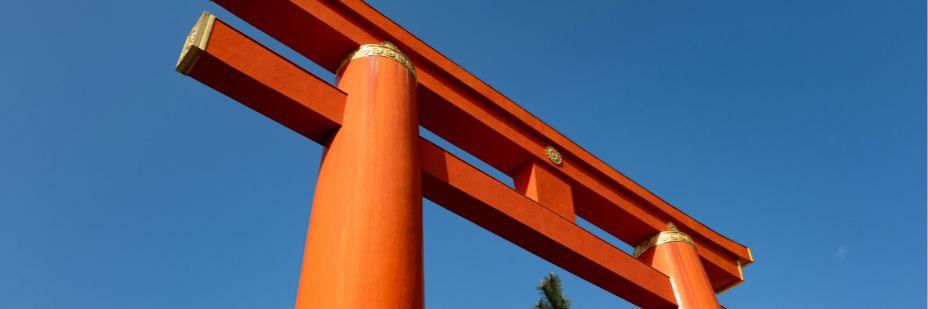
To transfer loads horizontally, a material must be able to compress in one area and stretch in another — a surprising relationship that defines flexion.
Under weight, the horizontal beam sags slightly, stretching almost imperceptibly on its lower half and shortening on the upper half. In other words, flexion is a combination of compression above and tension below.
And of all the materials available to humankind for millennia, only wood could resist both opposing forces.
Thus, from the beginning of time until the advent of steel and reinforced concrete, the lintel had to be made of wood. But wait — if that’s true, why have there always been so many stone lintels?
Because they are not real lintels. They are impostors — deceivers. Their depth is so great relative to their span that they conceal within themselves the hidden curve of an arch. Stone lintels are not lintels at all: they are Trojan horses.
When a stone lintel tries to be sincere, attempting to work in flexion, it cracks beneath its center — exactly where tension is greatest. And then the wooden beam looks on, amused, and says: "See? I told you so."
The Hidden Strength of the Horizontal Line

The lintel is the triumph of the horizontal. Symbolically, the vertical has long been associated with strength, action, and — as an inevitable extension — a certain macho way of thinking: the masculine, the dominant. The horizontal, by contrast, has been seen as weak, passive, feminine. A great mistake — and a greater lie.
The lintel reveals the complexity and elegance of the horizontal and its immense, almost hidden strength. Without boasting, without making its power apparent, it guides the load and transforms it, gracefully transferring it to the edges of the opening.
In doing so, it liberates the wall with as much poise and subtlety as determination and precision.