When Natalie de Blois (1921-2013) graduated in architecture from Columbia University in 1944, there were only a handful of women in the United States who could boast a noteworthy career in architecture.
Since she began her professional career in the so-called “Mad Men era” of architecture, it is not surprising that she was once fired from a job because a male colleague allegedly found her presence distracting from work.
Shaping Postwar New York
After she started at the famous architectural firm Skidmore, Owings & Merrill (SOM), however, de Blois quickly rose through the ranks and created iconic buildings that shaped postwar architecture and the center of Manhattan.
In her five-decade career, de Blois was instrumental in the design of numerous remarkable projects—such as New York landmarks of the 1950s and 1960s.
Some of her buildings are among the finest examples of commercial modernism, such as the Lever House, the headquarters of the Pepsi-Cola Corporation, the headquarters of the Connecticut General Life Insurance Company, and the headquarters of the Union Carbide Corporation.
Her style was described as luxurious and elegant modernism, and to this day, some of her buildings are among the tallest ever designed by a female architect.
Professional Development in the “Mad Men” Era of Architecture
But even though de Blois had long since established herself as a superstar at SOM, she repeatedly faced problems at work because of her gender. She recalled that male colleagues would go to all-male clubs with SOM clients during lunch breaks to network and socialize, and she was not allowed to join. Once, she was asked not to attend an inauguration ceremony because she was pregnant. In addition, her male colleagues frequently commented on her appearance and clothing. On another occasion, Gordon Bunshaft, one of the partners at SOM, said to her: “You can’t come to the meeting unless you go home and change first. I don’t like green.”
However, green turned out to be a lucky color for de Blois. The Pepsi-Cola Corporation headquarters, built in 1960, was praised by critics for its jewel-like and almost floating exterior façade of gray-green glass and aluminum. The building was designated a landmark of New York City in 1995.
From 1980 to 1993, she was also a professor of architecture at the University of Texas. As an outspoken advocate for women in architecture, she left a legacy and paved the way for female architects to be recognized as equal and competent professionals, rather than as “woman architect”.
“An architect whose work stood out, even if she herself did not”
After her death in 2013, de Blois was described in a New York Times obituary as “an architect whose work stood out, even if she herself did not.”
Beverly Willis, founder and chairwoman of the Beverly Willis Architecture Foundation, a nonprofit organization dedicated to raising awareness of the role of women in construction, wrote in this obituary that at that time there was not a single woman working for a prestigious company like SOM.
Willis added: “And of course, Natalie built bigger buildings, right in the heart of Manhattan. These were famous buildings, showered with praise by the press, but Natalie’s name was never mentioned.”
Natalie de Blois’s colleagues were well aware of her talents. In a 1974 autobiography, Nathaniel Owings, one of the founders of SOM, described Natalie de Blois as follows: “Her mind and her hands created true design marvels—and only she and God will ever know how many great solutions, which bore the stamp of one of SOM’s male heroes, were thanks to her, even if neither SOM nor the clients ever credited her.”
A Misguided Pritzker Prize
The excellence of her designs was also recognized by others—and also used for their own benefit: Natalie de Blois’s business partner Gordon Bunshaft was later said to have reaped the laurels for their joint work alone.

https://architectuul.com/architect/natalie-de-blois
When Bunshaft finally won the Pritzker Prize in 1988, also known as the “Oscar of architecture”, the prize committee described the Lever House as follows: “It says everything that can be said, delicate, precise, elegant, with surfaces of glass, with ribs of steel … an impeccable achievement.”
dormakaba Editorial Team

Related articles

Architectural Elements That Changed History
The Framing: Above and Below
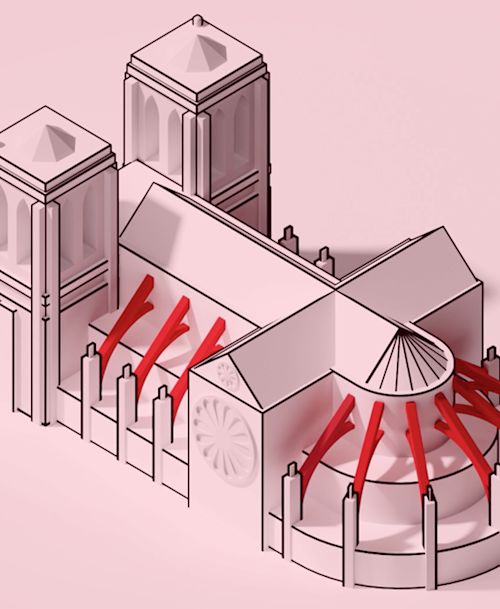
Architectural Elements That Changed History
The Flying Buttress: The Art of Support
Architecture
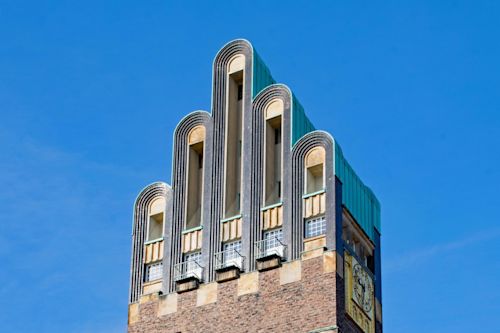
Jugendstil: the German Interpretation of Art Nouveau
Jugendstil was not merely a branch of Art Nouveau but a reinterpretation deeply grounded in German culture. The term comes from “Jugend,” a Munich-based magazine founded in 1896 that quickly became a cultural hub for young creatives. It promoted innovative ideas in architecture, the decorative arts, and graphic design, standing in opposition to the traditional academic historicism that dominated the period.