The intercom buzzes—it’s the courier with a package you’ve been waiting for. You open the door, and the delivery driver steps into the residential complex: a community of several blocks with shared spaces and amenities, but no dedicated room for parcels or smart lockers.
The doorman is absent, and no security staff are nearby, leaving the courier to wander around without clear directions. In the end, your package ends up at a neighbor’s doorstep—or worse, you receive the dreaded message: “Delivery was not possible.”
How often does this scene play out across the world every single day? With the explosive growth of e-commerce, residential communities, apartment complexes, and office buildings are grappling with an unprecedented challenge: how to securely receive, store, and distribute a growing wave of parcels.
Keep on Shopping

Amazon alone delivers more than 9 billion items on the same day worldwide. This sheer volume makes the lack of dedicated package rooms or distribution spaces in most residential communities and buildings unsustainable.
Doormen, administrators, maintenance managers, and security staff are overwhelmed. Sorting, storing, and notifying residents about their deliveries consumes so much time that it often prevents them from attending to other critical property management duties.
The High Cost of Insecurity
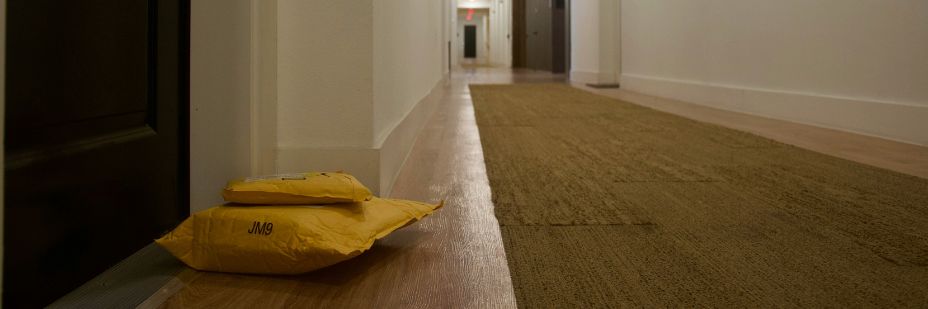
The problem isn’t just poor organization—it’s also a major security risk. So-called “porch pirates,” the term for thieves who steal packages left at doorsteps, made off with an estimated $12 billion worth of goods in the U.S. alone in 2023. According to The New York Times, Americans lose $25 million worth of merchandise every day, equivalent to 1.7 million packages reported as “lost.”
Police have even found that some thieves access shipment tracking systems, giving them inside knowledge of what each package contains, along with its delivery address and time. To make matters worse, they sometimes disguise themselves in courier uniforms, moving so quickly that they occasionally pass the real delivery drivers on the very same doorstep.
How Smart Lockers Improve Security and Convenience

Parcel management rooms and mailboxes integrated with smart access control systems are emerging as the ideal solution to today’s delivery challenges. They enhance security while offering greater convenience and efficiency. Their installation is transforming parcel handling in residential complexes, mixed-use buildings (home/office), and multihousing, helping to deliver a premium experience for residents.
Package rooms create a secure, controlled space for deliveries. Equipped with smart technology—such as connected surveillance, monitoring, and automatic notifications—they ensure both safety and efficiency. By allowing access only to authorized personnel, they prevent theft and loss while giving property managers greater oversight and residents the flexibility they need.
In addition, visitor management solutions make it possible to control access to perimeter doors and shared spaces through single-use Xpress PIN codes or multi-use PIN codes set for specific dates and times.
Efficient and Contactless Solutions
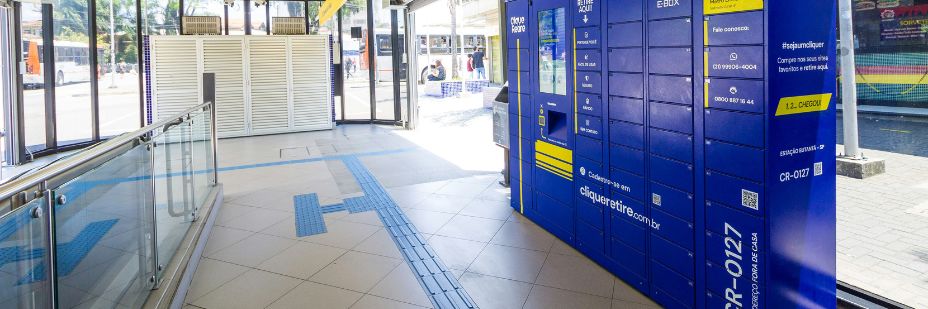
Smart lockers represent an efficient, contactless solution that allows residents to pick up deliveries autonomously and securely at any time of day. Their adoption has been growing rapidly: the global smart locker market was valued at over $1 billion in 2024 and is projected to reach $2.55 billion by 2032.
Equipped with sensors and monitoring systems, lockers provide real-time tracking for both users and administrators. Integration with courier services further streamlines coordination and shipment traceability. And, since they can be managed from centralized platforms, package flows remain under constant control, simplifying oversight and speeding up the resolution of incidents.
The Future of Mailboxes: Sustainability, Biometrics, and Artificial Intelligence
Emerging trends in package management focus on automation, cybersecurity, sustainability, and the wider use of AI. Next-generation lockers already integrate biometric authentication and smartphone connectivity, reducing failed delivery attempts and cutting emissions from delivery vehicles—an important step toward greener logistics.
Integration with courier systems also optimizes delivery scheduling based on room capacity. Spaces are adaptable to package volume and resident numbers, and new features are expected to grow in demand—for example, temperature-controlled lockers for food and other perishable shipments.
The rise of these smart infrastructures will also create new professional roles. Workplace managers—already complementing facility managers in corporate environments—will take responsibility for the organization, optimization, and maintenance of shared spaces. In residential communities, this role translates into ensuring the proper functioning and security of common delivery areas.
Implementation Challenges and Key Requirements

What does it take to install smart package rooms? The main challenges include upfront investment, space availability, maintenance, and both physical and cyber security needs. To be effective, parcel rooms must be accessible, user-friendly, and able to ensure seamless coordination with couriers so deliveries can be handled efficiently.
The first step is a preliminary assessment to determine the optimal size and design of the space, considering factors such as the number of residents, expected parcel volume, and available areas. This evaluation helps estimate implementation costs, which must also account for ongoing maintenance and system upgrades.
Smart integration is another crucial element. Lockers and package rooms connected to smartphones, IoT devices, and centralized management platforms—using digital access and electronic records—require the highest level of cybersecurity protection and strong guarantees around data privacy.
Equally important is creating clear community policies to raise awareness among residents, service providers, and building staff about the need to respect and maintain these systems. However, ensuring compliance is often a challenge.
Finally, out-of-home delivery models are gaining momentum as a complementary solution. These include lockers and pickup points located outside residential complexes, designed to optimize urban logistics and enhance user convenience.