Six ways to promote health in the workplace in the construction industry.
Designing and constructing new buildings is an attractive career goal or already a lucrative line of work for many people. However, working in construction involves many stress factors and is associated with numerous risks, whether it’s contact with harmful chemicals, constant loud noise, handling heavy loads, or the danger of falls and electric shocks. For millions of people working on construction sites worldwide, “promoting health in the workplace” means more protection and safety, and therefore holds a very high priority.
According to a study by the International Labour Organization (ILO), the construction industry is the sector with the most fatal workplace accidents. The organization estimates that every year, 2.3 million employees worldwide lose their lives due to work-related accidents and illnesses.
Although these numbers have improved in some parts of the world due to stricter regulations, overall, companies in the construction industry in particular need to increase their commitment to reduce or—ideally—prevent workplace accidents and their disastrous consequences.
On the occasion of World Health Day, which is celebrated annually on April 7th around the world, we have compiled a list of suggestions that can help promote workplace health in the construction industry.
Continuous Risk Assessment and Control
According to the US Occupational Safety and Health Administration, the “fatal four” are the most common causes of injuries and accidents in construction. These include falls, being struck by objects, electric shocks, and being caught between equipment or objects.
Accident causes usually do not result from minor misjudgments or carelessness, but from significant failures that could often have been prevented through continuous risk assessment and control of construction sites. Those responsible on construction sites should therefore pursue a proactive approach. They should proactively identify and analyze the hazards that pose the highest risk potential for employees and establish measures to control them.
Use of Protective Equipment
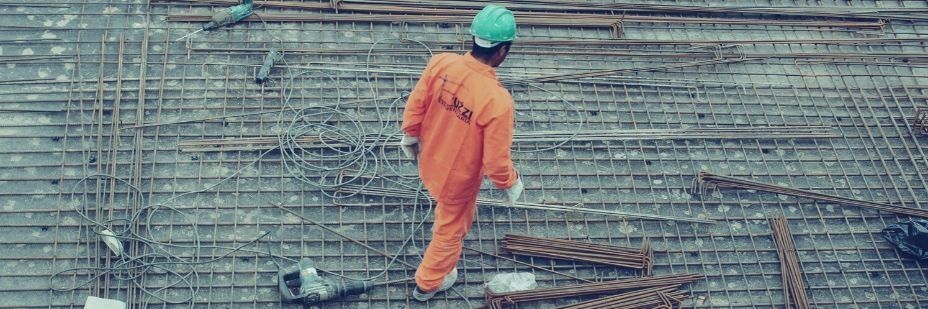
The minimum protective equipment for anyone entering or working on a construction site is a safety helmet and safety glasses. Additional protective equipment should be adapted to the individual situation, as the risks for each worker can vary greatly depending on their area of work.
Once those responsible on the construction site have identified all potential hazards and risks, they must assign each employee protective equipment appropriate to their activity. Personal protective equipment (PPE) in construction generally protects five body zones: there are a variety of products for eyes and face, feet, hands, head, and hearing.
High-visibility clothing is also important. It is another essential measure to reduce accident risks such as being hit, run over, or—in the case of excavators—being swung at by machinery in the work area.
Thorough Instruction, Intensive Training
Before a construction site may be entered, thorough safety instruction is essential to inform employees of possible risks. With this knowledge and awareness, they are then able to protect both themselves and colleagues. Depending on their area of responsibility and duties on the construction site, employees can also benefit from additional training and specialized courses on topics such as cranes and rigging, fire protection, fall protection, or workplace hygiene.
Site managers can also take advantage of technologies such as Augmented Reality and artificial intelligence (AI) to enable faster and more efficient training processes.
Encouraging Regular Breaks
In a noisy and highly stressful work environment, as can be the case on a construction site, even experienced professionals can experience fatigue. Towards the end of a long workday, the risk increases that, for example, reflexes slow down. For this reason, construction managers must ensure that everyone working on the site takes regular breaks to recover and rest.
For on-site and standby times, the International Labour Organization recommends a weekly rest period of at least 90 hours, including one uninterrupted 24-hour break. In addition, construction workers are entitled to compensatory rest under certain conditions, such as in shifts with particularly high workloads, in safety-relevant tasks, or when working away from home.
Stress Management in Everyday Work
Studies show that the construction industry is one of the most stressful sectors. 82% of employees feel stressed at least during part of their workweek. Stress can cause a variety of physical and mental health problems and at the same time increase the likelihood of errors.
Some studies now confirm that simply talking about stress and sharing the associated feelings can reduce stress. To create a safer work environment and improve employee well-being, construction managers must therefore promote healthy dialogue on their construction sites.
Educating employees about stress management and offering first aid training to maintain mental health are other meaningful measures to improve workplace health.
BIM for Optimizing Workplace Health
Many professionals in the construction industry are familiar with the possibilities of BIM (Building Information Modeling): Using BIM saves time and costs, reduces waste, and helps teams eliminate design barriers.
However, BIM also increases safety, as this planning tool enables a holistic view of construction projects. Planning teams can thus identify expected problems in the model and take necessary measures to solve and eliminate them before they occur in reality. This also applies to possible accidents and their prevention.
Especially in the construction industry, it is not uncommon for collaboration between administrative staff and on-site workers to be limited. This can certainly lead to a kind of alienation among employees and negatively affect the sense of community among workers.
By using technologies such as Building Information Modeling (BIM), all those involved in the construction project are brought closer together. The integrative and efficient planning enabled by BIM thus also contributes to promoting workplace health in the construction industry.
dormakaba Editorial Team

Related articles

Security
The Role of AI in the Security Operations Center
Artificial Intelligence has emerged as a key lever to enhance SOC performance, enabling teams to manage the scale and complexity that conventional tools can no longer handle effectively.

Security
The Invisible Perimeter: Rethinking Stadium Access Control
The sports industry has been grappling with this tension between protection, technology, and spectator experience for years. A study drawing on the views of more than 150 security managers at sports venues across the United States identified the most pressing challenges they face: managing access flows, coordinating increasingly integrated technology systems, and the constant pressure to reduce wait times.

Security
How Expedition Ships Prepare for Health Crises on the High Seas
The recent outbreak of hantavirus on the expedition cruise ship Hondius escalated from an isolated problem to a global health crisis in a matter of days.