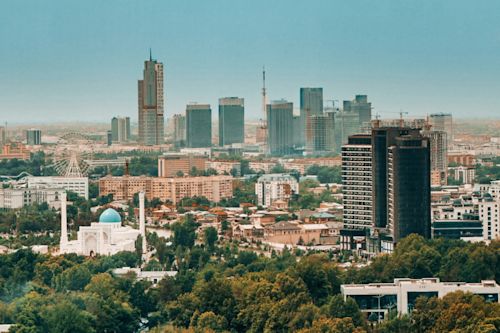
The global spread of COVID-19 varied: Some countries, such as New Zealand or Hong Kong, were able to significantly reduce cases by mid-2020, while others already experienced the so-called second wave. Meanwhile, in large and decentralized countries like the United States, viral epicenters shifted from densely populated cities to the provinces.
Block
Although the further development of the virus is uncertain, it will eventually subside. However, once it is eradicated, life will not be the same as before the pandemic. Because even if all COVID-19 infections disappear worldwide, there will not be a single industry left unaffected by the pandemic. Nevertheless, few areas of life have been as affected by COVID-19 as work itself.
Millions of employees spend about a third of their day in the office. On the one hand, working from home was already on the rise before, but COVID-19 forced many companies to take the topic of so-called remote work even more seriously. On the other hand, awareness of topics such as hand hygiene has increased, as has knowledge of public health risks posed by confined spaces.
As a result, many workplaces resorted to short-term solutions such as setting up hand hygiene stations, ventilation concepts, or introducing new behavioral roles at work. But what long-term changes in everyday office life and work culture can employees expect once the immediate crisis is over?
Future of Work: Several Million People working remotely

Despite the growing home office hype, at the beginning of 2020, about 44 percent of companies worldwide did not allow any remote work. However, COVID-19 forced many companies to reconsider their stance on this form of work. As a result, many labor market experts predict that after COVID-19, office design and infrastructure will change in such a way as to accommodate the growing number of people working remotely. This change could mean more phone booths—enclosed cabins for making calls—flexible workspaces, and, more importantly, less crowded offices.
Susan Hayter, Senior Technical Advisor on the Future of Work at the International Labour Organization (ILO), says that this state of "business as unusual" could be the future of work. "Even before the pandemic, there was lively discussion about the impact of technology on the future of work," she says.
"However, this future has arrived sooner than expected, as many countries, companies, and workers have switched to remote work to contain the spread of COVID-19, which has dramatically changed the way we work. Virtual events are now commonplace, and business activity has increased across a whole range of digital platforms."
Offices will not become obsolete, but they must evolve
Undoubtedly, millions more people—especially in industrialized countries—will be able to work remotely. However, global employment figures show that not everyone can do this. The ILO estimates that in high-income countries, only 27 percent of workers could work from home. However, this does not necessarily mean that they will continue to do so exclusively after the pandemic. Likewise, about two billion people work worldwide in the informal sector, from food supply to agriculture.
Susan Hayter from the ILO emphasizes the social and economic value of the workplace, which gives many workers a sense of purpose, identity, and community.
"We need to unlock this brave new world to ensure that people can work in it under safe conditions," says Susan Hayter.
In line with this, McKinsey classifies work areas according to the value that remote work could bring. According to this, there are various categories: from exclusive remote work to different hybrid models, in which remote work is combined with on-site work, to purely on-site work.
Even though remote work will continue to see an unstoppable increase, workplaces themselves will not disappear in the foreseeable future. However, they will have to evolve in line with changing attitudes towards safety and public health.
New infrastructures in workplaces to optimize safety and health
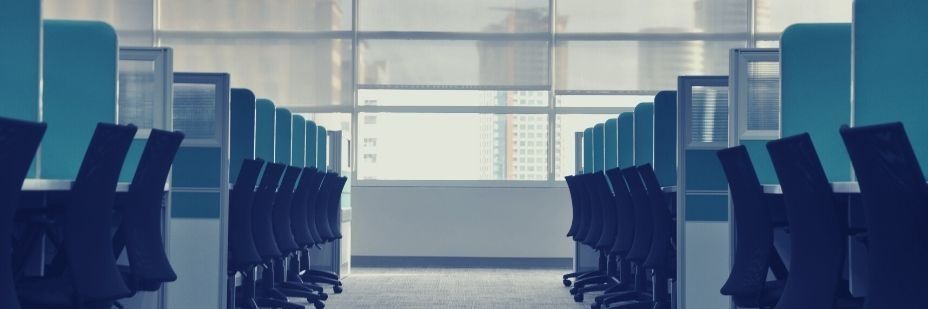
In the long term, COVID-19 will force us to focus on hygiene, privacy, and safety in office design. For example, open-plan offices, which emerged in the mid-20th century, aimed to make workplaces more dynamic and cooperative. However, since a large number of employees could be in the same room, this concept could make employees susceptible to the spread of a virus. Therefore, future offices will opt for more personal space for each employee instead of open layouts, and for smart solutions for greater seating distances.
When COVID-19 is defeated, office concepts will likely feature new technologies that promote hygiene and employee well-being. From smart elevators to contactless entry systems or self-cleaning surfaces—the infrastructure of future offices will be increasingly enhanced.
Oliver Wainwright, architecture and design critic at The Guardian, says that diseases have always shaped the design of cities and offices. He cites the example of a futuristic office of a waste management company designed by Zaha Hadid Architects in the United Arab Emirates to give a taste of office design after COVID-19.
Elevators can be called from a smartphone, so it is no longer necessary to press a button inside or outside. Meanwhile, office doors open automatically with the help of motion sensors and facial recognition.
Oliver Wainwright, architecture and design critic at The Guardian
A turning point for cities and office design
Throughout history, economic opportunities and labor market prospects have greatly influenced how cities are organized and developed. Especially since the industrial revolution, when billions of people moved to urban centers, cities began to boom as they promised better job and educational opportunities. After COVID-19, the pandemic will change urban landscapes in the long term—even if not everyone will have the opportunity to work remotely. Many economists and sociologists in industrial societies believe that the increase in remote work will hollow out and decentralize cities. "I think we will return to offices, but not in the same way as before," said Paul Cheshire, Professor of Economic Geography at the London School of Economics.
He goes on to say that working from home will create a demand for larger houses, so many people will move from cities to the suburbs or countryside, where land is cheaper. This could relieve big cities, rejuvenate rural areas, and improve quality of life for many. Prof. Cheshire adds that local desk-sharing will probably also be used. These are special office workspaces that employees who usually work from home can use—for example, when they temporarily need better IT infrastructure or office equipment, or want some peace from their children. In smaller cities, so-called hot desking areas are expected to emerge."
On the way to a new work culture

The reduction of office space will affect small, medium, or large companies as well as industrialized and emerging countries differently. Just as the spread, the eradication of COVID-19 will probably also occur with a time lag. However, no one knows exactly what long-term changes in the workplace will be caused by the pandemic—and how exactly they will manifest under different conditions.
"There is a whole group of organizational psychologists, as well as sociologists and management professors, who will spend the next five or ten years studying the effects of this pandemic in different places," says Adam Grant, Professor at the Wharton Business School.
However, he believes that the pandemic is also a tremendous opportunity for leaders to learn and grow and to create a work culture of empathy worldwide. Prof. Grant adds: "On the one hand, we humans do not like uncertainty and unpredictability, but on the other hand, we are extremely adaptable."