Although the number of traffic jams dropped to a historic low in 2020 due to the COVID-19 pandemic, the number of cars continues to increase steadily. This development is accompanied by more congestion, longer waiting times, and poorer air quality, and so far shows no signs of slowing down.
Given the continued rise in population and ongoing urbanization, traffic congestion will remain a major problem in most cities around the world in the future. However, some urban centers have already implemented solutions that could also be applied elsewhere.
Below, we present three examples from three different countries that have taken successful steps to eliminate traffic congestion in large urban centers and thus help reduce CO₂ emissions.
Low Emission Zone in London
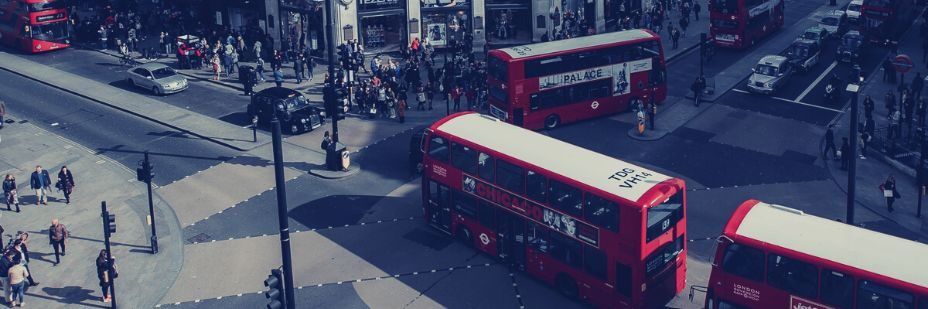
As a pioneer in reducing inner-city traffic, London began in 2003 with the introduction of a city toll—the so-called “Congestion Charge”—to ban private vehicles from the city center.
As a further measure, the Low Emission Zone (LEZ) was established in 2008 to keep particularly polluting vehicles away from the densely populated city center and residential areas.
An extended version of the LEZ is the Ultra Low Emission Zone (ULEZ), which further relieves traffic and helps reduce CO₂ emissions.
By 2025, these measures are expected to contribute to a 60 percent reduction in emissions caused by heavy goods traffic and make London cleaner and more livable.
Data-driven solutions for optimizing public transport in China
The most populous country in the world is also the largest car market in the world. In 2021 alone, vehicle sales in China rose by around 30 percent. As a result, local governments and the Chinese Ministry of Transport are aware of how important it is to provide citizens with a reliable public transport network.
As part of a pilot project currently running in the major cities of Suzhou (10.7 million inhabitants), Chengdu (16.3 million inhabitants), and Harbin (5.8 million inhabitants), an intelligent transport system (ITS) has been introduced. This is a data-based solution that enables a holistic view of the cities’ bus networks.
ITS operators can manage and adjust bus routes, thus ensuring fast and reliable public transport that encourages more people to give up their own cars. Those who still choose to drive can use LED signposts on the roads to avoid traffic jams.
Real-time congestion management in Singapore
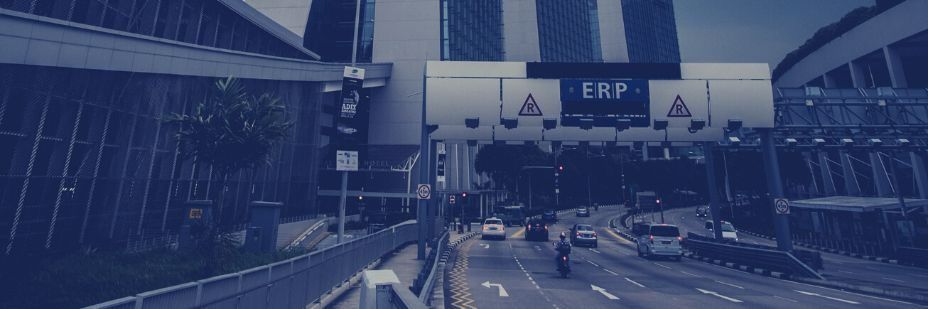
Singapore is not lacking in awards for efficiency and sustainability. It is therefore not surprising that the Southeast Asian city-state can also boast successful traffic relief projects.
With a 3,500-kilometer road network that is in excellent condition, Singapore has one of the highest road densities in the world.
In addition, the electronic road usage fee (ERP) system introduced in 1998 has proven to be groundbreaking: ERP fees are regularly reviewed and updated to ensure that traffic flows at optimal speed, and the system is constantly updated using the latest technologies.