The Japanese master Tadao Ando argues that architecture can influence the way people live. But the opposite is equally true: when lifestyles change, architecture is called upon to transform.
Among the most significant shifts of recent years, digital nomadism stands out as one of the most far-reaching. It is not simply a matter of working remotely, but of a genuine paradigm shift in how people live and relate to one another — one that is redefining tourism, hospitality, and the design of hybrid spaces.
What Is Digital Nomadism and How Did It Emerge?

The digital nomad lifestyle is defined by a deliberate choice: continuous or semi-continuous mobility, medium to long stays in different cities, fully remote or independent work, and a deep integration of professional and personal time. It is a way of life in which professionals use digital tools — laptops, smartphones, and fast internet connections — to carry out their work without being tied to a fixed location.
The term was coined in the 1990s and popularized by the book Digital Nomad by Tsugio Makimoto and David Manners (1997), in which the authors described a new way of life made possible by the convergence of telecommunications and information technology. In their vision, technology would free people from traditional geographical constraints and from dependence on a fixed workspace.
How Digital Nomadism Went Global: Technology, Remote Work, and a Pandemic
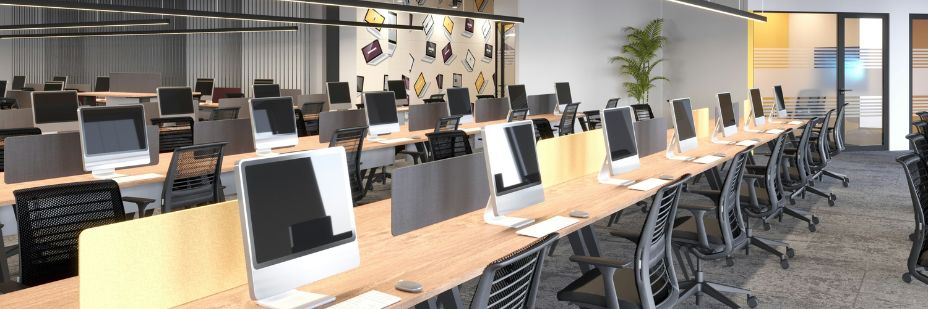
The expansion of digital nomadism has been driven by three major interconnected factors: the widespread availability of broadband and mobile technologies, the growing acceptance of remote work, and — to a very significant degree — the COVID-19 pandemic, which radically normalized working from anywhere.
According to MBO Partners' Global State of Digital Nomads Report, the number of digital nomads in the United States grew from approximately 7 million in 2019 to over 17 million in 2023. Europe is experiencing steady growth as well, supported by dedicated visas in countries such as Portugal and Spain.
Given the scale of the phenomenon, it is only natural that it has begun to influence tourist flows, rental markets, and the demand for specialized services in destination cities — particularly hybrid spaces that blend work, socializing, and hospitality.
Nomads vs. Remote Workers: A Distinction That Is Reshaping Hospitality

Remote work is an organizational arrangement: a person works for a company — or as a freelancer — from a location other than a traditional office, while maintaining a stable home base and defined territorial roots. The impulse to use bars, cafés, or restaurants often stems from the desire to escape the home environment, break the monotony of domestic routines, and reconnect with a social dimension. Going out, changing scenery, and encountering others becomes a way to counter isolation while remaining within a structured daily life.
From a design perspective, the distinction is significant. While the transformation of hospitality spaces into forms of "temporary living" is driven primarily by digital nomadism, the reconfiguration of bars and cafés also involves remote workers in a meaningful way. It is the latter — more numerous and territorially rooted — who have prompted many neighborhood establishments to equip themselves for longer stays. In other words, while the digital nomad is redefining the very concept of urban hospitality, the remote worker is transforming the local café into an everyday extension of the home office.
From Quick Coffee to All-Day Workplace
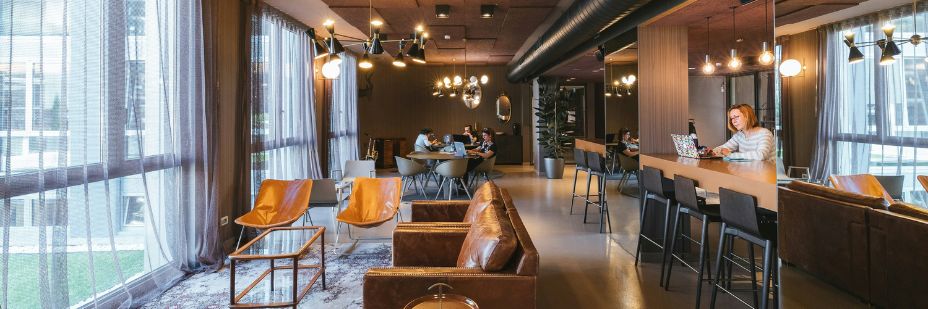
Bars and cafés are among the first environments to have registered this transformation. Where layouts were once built around short stays and rapid table turnover, the demand has reversed: customers no longer come in simply to consume — they come to stay. Seating must now offer comfort over several hours, lighting must be calibrated to avoid screen glare, and surfaces must accommodate laptop use with ease. Electrical outlets and a reliable connection are no longer a bonus — they are a baseline expectation.
This creates a new tension for designers: how to encourage longer stays without undermining the economic sustainability of the business. The organization of space becomes more nuanced, with informal zones, communal tables, and quieter corners that allow for concentration. Acoustic quality plays a central role, as does the management of flows and patterns of use throughout the day.
How Hotels Are Becoming Spaces for Living and Working
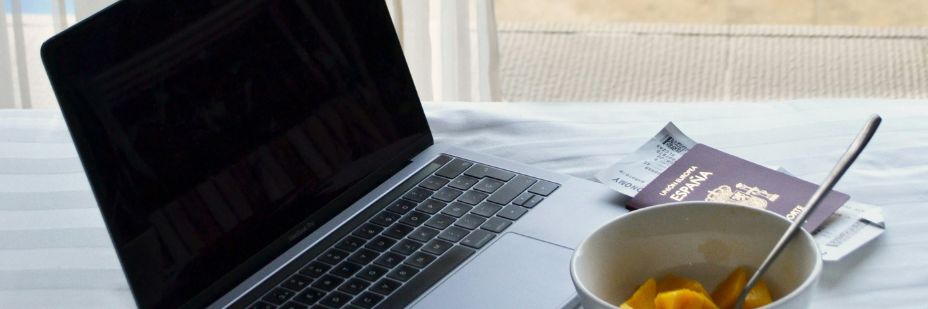
The shift is even more pronounced in hospitality. Hotels, hostels, and serviced apartments are repositioning themselves as places of temporary life, spaces where a stay integrates both living and working dimensions. Common areas are no longer designed exclusively for leisure, but become hybrid environments capable of hosting informal meetings, individual calls, and networking moments.
Shared kitchens and outdoor spaces take on a different significance as well: no longer simply ancillary amenities, but elements that contribute to the formation of a temporary micro-community.
In this context, design is not only about aesthetics or functional layout — it is about the continuity between public and private, between open-access and reserved areas. Flexibility becomes a guiding principle, as does the ability to modulate spaces for different uses throughout the day.
Design Implications: Flexibility, Identity, and Responsibility
For architects and designers, a dual challenge has emerged. On one hand, there is a need to respond to new functional demands: hybrid environments, extended stays, integrated digital infrastructure, and access systems that guarantee security and control without disrupting the fluidity of the experience.
On the other hand, there is an obligation to consider the urban and cultural impact of these spaces. The risk of global standardization is real: cafés and hotels could become interchangeable from New York to Bali. The design challenge, therefore, is to maintain an identity rooted in local context — drawing on regional materials, languages, and traditions — while promoting a balance between international openness and social inclusiveness, and working to contain the risk of gentrification.
Designing for digital nomads means working on flexibility and responsibility in equal measure: creating adaptable spaces without sacrificing cultural depth, and offering advanced services without transforming the city into a replicable backdrop.